
Open rates, clicks, ROAS, conversion rates. These metrics have one thing in common: they are comfortable. They are easy to pull, easy to present and easy to defend in a meeting. But they measure activity, not business outcomes.
A campaign can deliver a ROAS of 5 and still be destroying margin if it is pulling in customers who buy once at a discount and never come back. An email with a 40% open rate can produce no meaningful impact on your business. Email send volume can grow month after month while your active customer base quietly shrinks.
All of these metrics offer value in your reporting system. But when they become the center of your reporting, they create an illusion of progress that does not reflect what is actually happening in your business. You can be hitting every campaign target and still be losing ground.
THE ECOMMERCE CUSTOMER METRICS THAT DRIVE REAL DECISIONS
There is a different set of metrics that answers real business questions. Not how many people opened the email, but which customers are generating margin and which ones are eroding it.
Enrique Miralda, author of CDP: How to Convert Data into Business, calls this customer economics: understanding each customer not as a contact in a database, but as an economic unit with its own cost, its own value, and its own potential. Most marketing teams have never looked at their customer base this way. When you do, the metrics that matter become obvious.
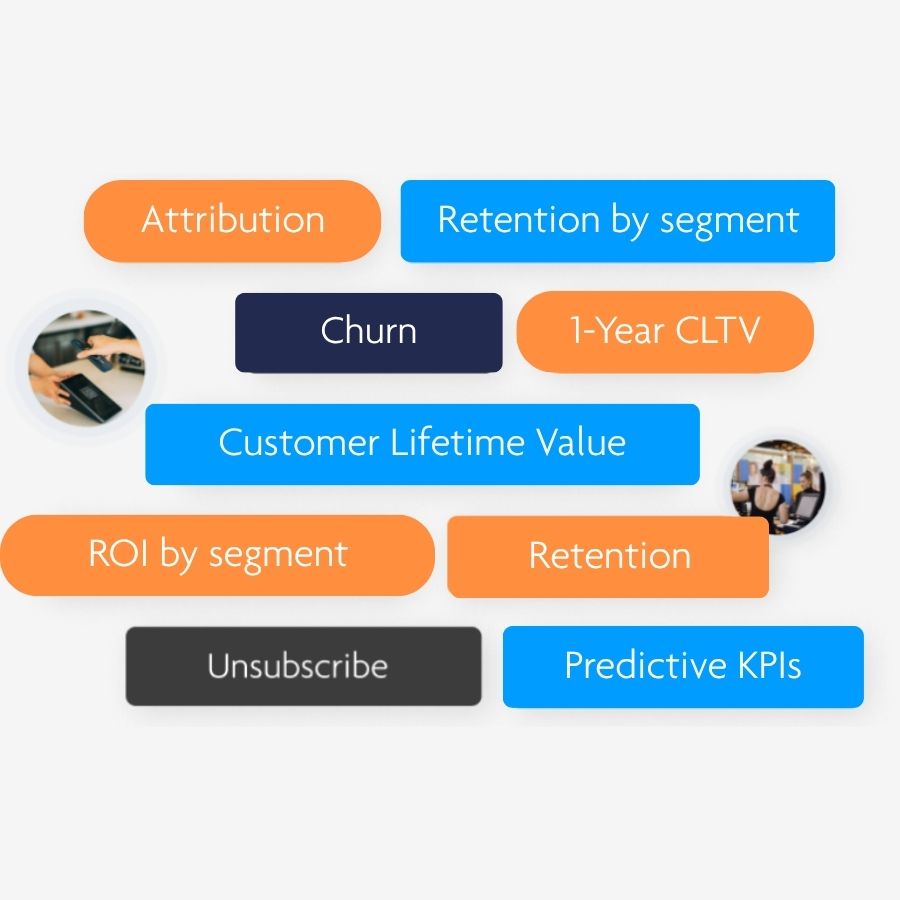
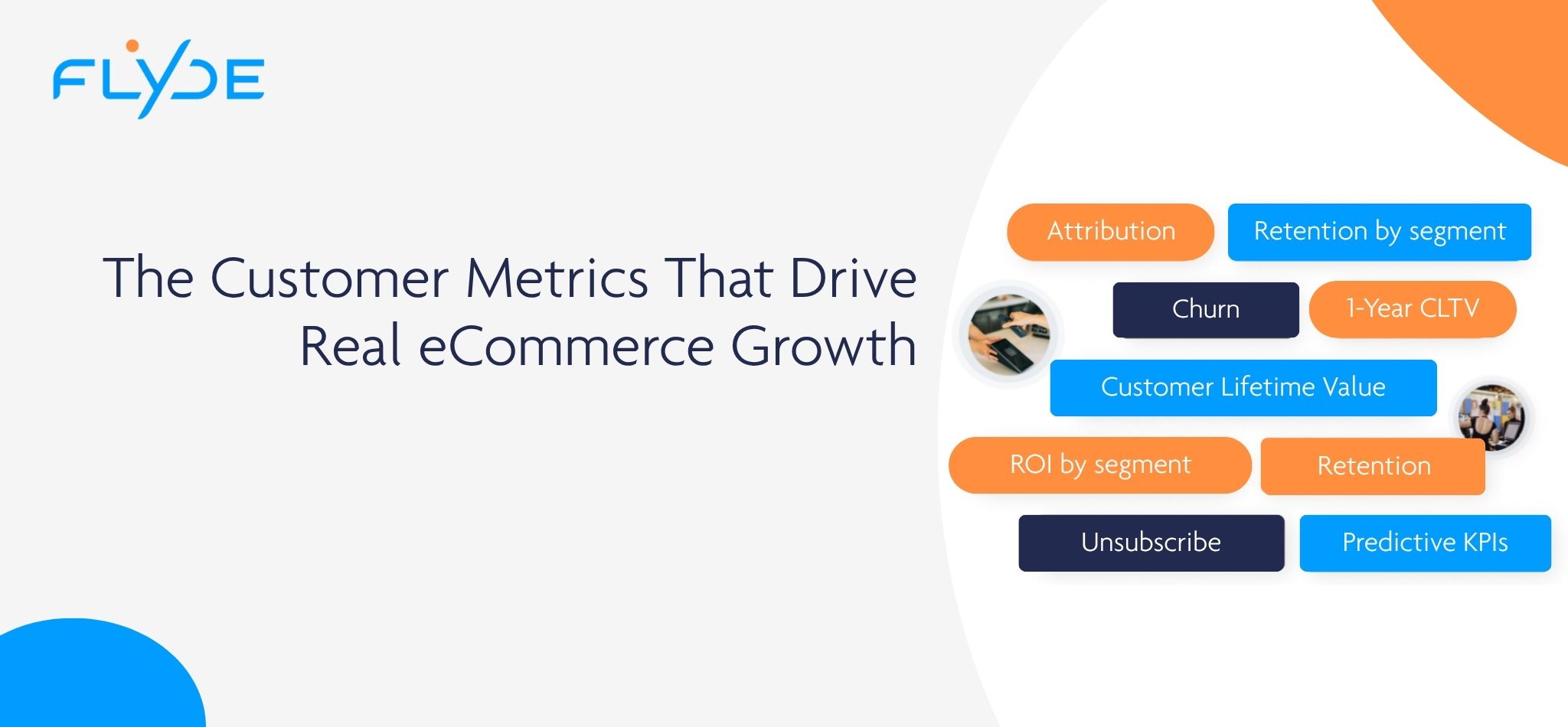
Those metrics are:
CLTV (Customer Lifetime Value)
How much revenue or margin a customer generates across their entire relationship with your brand. Without this number, it is impossible to know how much you can reasonably spend to acquire or retain a customer. As Miralda puts it directly: without CLTV, you do not know whether you are growing or destroying value.
Retention Rate by Segment
Not overall retention, but retention within your most valuable segments. A 5% improvement in retention can translate into 25% to 95% more profit, but only if you are retaining the right customers.
ROI by Customer Segment
The return on your marketing activity is not uniform across your customer base. Some segments respond well and are genuinely profitable. Others consume budget without generating real value. Without unified data, that distinction is completely invisible.
Omnichannel Attribution
Which channels and touchpoints are actually contributing to conversion and retention? The last-click model that most teams still rely on overvalues certain channels and ignores others entirely, distorting every investment decision you make.
Predictive KPIs by Customer
Knowing what has already happened is useful. Knowing what is likely to happen next is what allows you to act before a customer is lost or an opportunity closes.
WHY THESE METRICS ARE INVISIBLE WITHOUT A CDP
Every one of these metrics requires something most teams do not have: a unified view of the customer across all channels and touchpoints.
CLTV cannot be calculated accurately when online and offline purchases live in separate systems. Omnichannel attribution does not exist if digital behaviour and transactions are not connected. Predictive KPIs cannot be built without a complete history for each customer.
A Customer Data Platform (CDP) solves exactly that problem. Not because it is a reporting tool, but because it unifies the data that makes these metrics possible in the first place.
In FLYDE, the Customer 360 app gives you individualized visibility into the most relevant KPIs for each customer and predicts how those KPIs will evolve over the next twelve months. Omnichannel attribution connects every touchpoint to its real impact on conversion and retention. And predictive models let you anticipate behavior before it becomes churn or a missed opportunity.
3 QUESTIONS EVERY ECOMMERCE SHOULD BE ABLE TO ANSWER ABOUT ITS CUSTOMERS
Miralda offers a simple test. If your CDP, or whatever combination of tools you are currently using, is working properly, you should be able to answer these questions without waiting for someone to pull a report.
1. Do you know how much a customer who has been buying from you for over a year is worth on average, compared to someone who has only purchased once?
2. Which channel contributes most to retaining your highest-value customers, not to acquiring them, but to keeping them?
3. What percentage of your active customer base has a high probability of not buying again in the next ninety days?
If any of these questions draws a blank, the problem is not a lack of data. It is how that data is organized and activated. That is exactly what a well-implemented CDP resolves, and it is the starting point for moving from measuring activity to measuring business outcomes.
If you have already implemented a CDP but are not seeing real impact on your business, we’ve identified 5 patterns which stall the progress of a CDP. These patterns are common across business of different sizes and sectors. Read more here.
WANT TO GO DEEPER?
Download the ebook with Enrique Miralda’s full customer economics framework for free. Note: the ebook is currently available in Spanish only.