
Category: Big Data
In a perfect world, a customer clicks on an ad, falls in love with your product, and converts on the spot. You know exactly which campaign worked, which channel gets credit, and where to increase your ad spend. Easy.
But we don’t live in a perfect world. The customer journey isn’t single-channel or linear. We live in the age of omnichannel marketing. The reality is that a single purchase might be influenced by a Google search, a TikTok video, a webinar, a promotional email, or a conversation with your sales team.
Attribution—figuring out which touchpoints actually matter in the buyer’s journey—is no longer simple. It’s a messy, multi-source puzzle. And without solving it, you risk spending your budget in the wrong places.
So, let’s dive in and examine what attribution really means in omnichannel marketing campaigns and what challenges we face as marketers to assign credit where credit is due.
WHAT IS ATTRIBUTION?
At its core, attribution is about assigning credit to each step that helps take a customer from “just looking” to “just bought.”
In single-channel or linear journeys, this used to be easy. But today, marketers rely on a mix of digital and offline channels working together, which means that the process of attribution has had to evolve.
Let’s look at a few common attribution models:
- First-touch: Gives all credit to the first interaction. If we want to focus on awareness metrics, this is a great approach, but it offers little insight in terms of conversions.
- Last-touch: Credits the final click before a conversion. Many platforms use this as the default model, but it represents an oversimplification of the customer journey.
- Linear: Spreads credit evenly across all touchpoints. Here, the whole journey is taken into account, but not very strategically.
- Time-decay: Gives more credit to recent touchpoints. This model is well-suited to long nurture cycles.
- U-shaped (position-based): Emphasizes the first and last touchpoints, with less credit to the middle. Here, there is an emphasis on the awareness and decision stages of the funnel, but the model is apt to under-credit important engagement actions.
- Data-driven: Uses machine learning to assign weights based on actual conversion data. This model is ideal—but requires strong data hygiene and scale.
Each model has its own advantages and its own bias. In complex, omnichannel campaigns with many different touchpoints, it becomes increasingly important to move beyond simplistic models and embrace AI-powered attribution, which can analyze massive, messy datasets and zero in on what is driving conversions.
WHY DOES ATTRIBUTION GET COMPLICATED IN OMNICHANNEL CAMPAIGNS?
In the world of omnichannel marketing, the customer journey rarely follows a predictable path. The customer journey nowadays is non-linear, fragmented, and often, a portion of the journey is undertaken while the user is still anonymous.
Here’s why attribution is so tricky today:
- Device-hopping behavior: Your lead might see an Instagram ad on a mobile, Google your product on a laptop, and sign up for your newsletter from a desktop at work. The right tracking set-up is essential for connecting the dots.
- Walled gardens: Platforms like Meta, Google, and Amazon often don’t share data with each other—or with you! In these cases, each platform may allow advertising and data analysis within its own ecosystem using proprietary attribution and tracking methods, while limiting access to raw data for export to other platforms.
- Offline influences: Sales calls, print materials, events, or word-of-mouth are all powerful but hard to track.
- Privacy regulations: With the deprecation of third-party cookies and tighter data regulations, user-level tracking is more limited, making granular attribution even more challenging.
The result? A lot of guesswork and misallocated spending.
HOW TO IMPLEMENT ATTRIBUTION STRATEGIES FOR OMNICHANNEL MARKETING CAMPAIGNS
The key to approaching attribution for omnichannel marketing is to stop aiming for perfect attribution—and start aiming for actionable insight.
Here’s how to get started:
- Unify your tracking setup:
- Implement clean, consistent UTM parameters
- Your CRM and ad platforms must be connected. A Customer Data Platform (CDP) like FLYDE can bring it all together (more on that later)
- Invest in smarter analytics:
- Develop funnel-based dashboards tied to your KPIs
- Implement machine learning models if your data volume allows
- Set realistic expectations:
- Attribution will never be 100% accurate
- Focus on directional insight that can inform your strategic decisions
- Align attribution analysis to business outcomes (not just clicks)
Instead of chasing perfection, chase progress. Map the journeys, unify the data, and use a tool like FLYDE to reveal insight. The goal isn’t to give perfect credit; it’s to make smarter, more confident decisions.
FLYDE’S VISION ON SMARTER ATTRIBUTION
To address these omnichannel challenges and the need for a unified view, a Customer Data Platform (CDP) like FLYDE becomes essential for consolidating data from various sources.
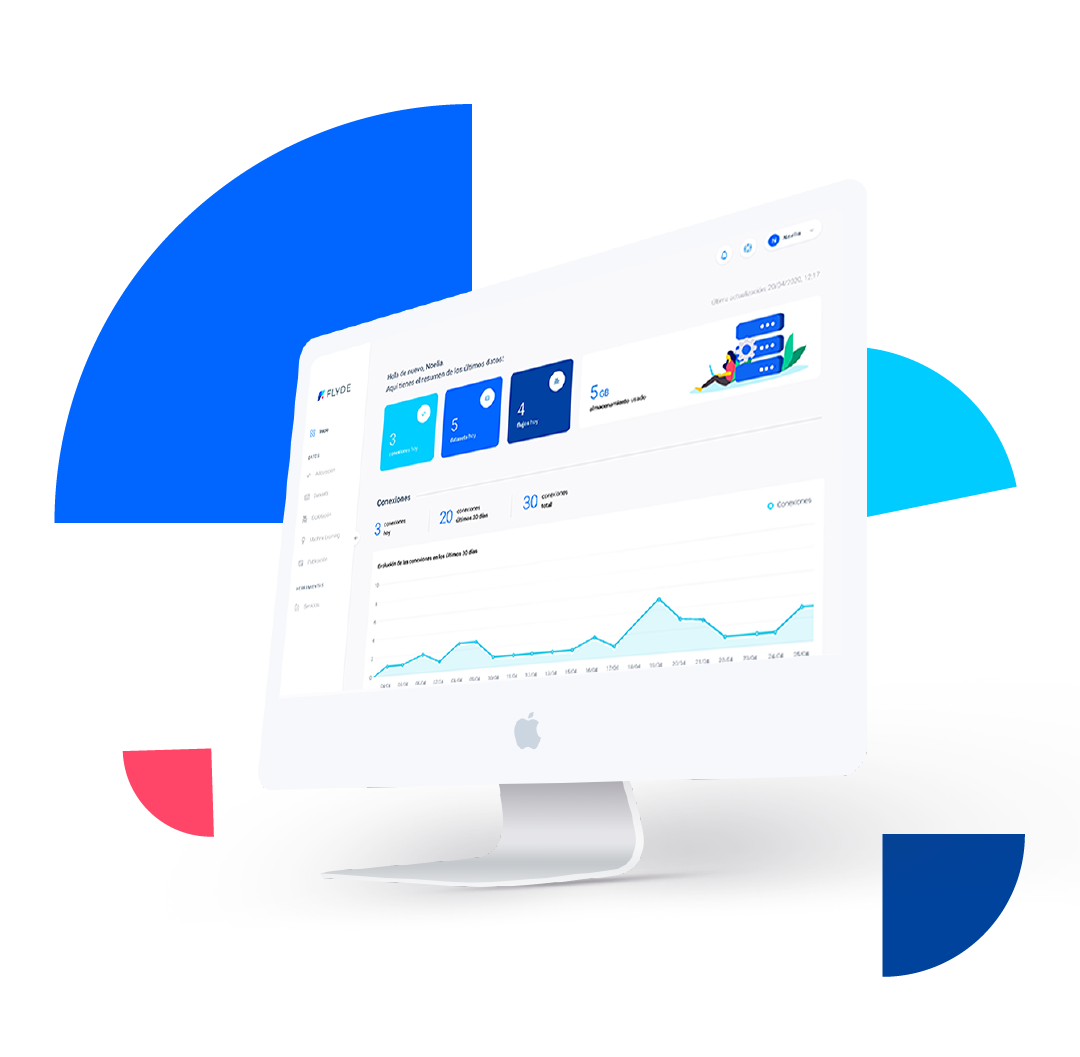
FLYDE centralizes data from touchpoints across paid media, CRM, social, email, web navigation, and offline events. Whether you’re working with dozens of fragmented sources or just trying to get a full view of the customer journey, FLYDE brings your data together to offer clarity and insight.
Here’s a real-world example:
Imagine you run a lead-gen campaign using a CPC paid search campaign in Google, Meta ads, a product webinar, and follow-up email flows. With FLYDE:
- All touchpoints are stitched together—even across platforms.
- You can see how many leads saw an ad and attended the webinar.
- You can compare performance across acquisition and nurture phases.
- Attribution is based on your journey logic, not just Google’s last-click default.
This kind of transparency doesn’t just look good in reports—it drives better decision-making. When you know what’s working, you can double down. When something’s underperforming, you can pivot fast. Ultimately, effective attribution leads to optimized advertising spend, a deeper understanding of customer behavior, and improved ROI.
Contact us for a demo and we can show you how FLYDE approaches omnichannel attribution in our easy-to-use Customer Data Platform.
Third-Party Cookies are slowly agonizing, the main browsers have already killed them. But, what would this mean for companies? Are we facing a new Marketing Era?
All your doubts will be solved in this article. Also we will see the possible alternatives or if there are not feasible alternatives for Third-Party Cookies and companies will have to completely change their consumer-based strategies.
Privacy
Third-Party Cookies have been used as an incredibly efficient tool, allowing companies to track their customers to have a complete vision of them. This tool generates value to companies in terms of customer knowledge and segmentation possibilities. However, it was incredibly invasive for many users, who saw it as an attack on their privacy.
Not just that, the fact that, as we mentioned, this type of cookies are going to disappear from the main browsers (if they have not already done so), presents us a scenario in which the future of digital marketing seems to be directly focused on the use of the data that the customer provides you with directly: the First-Party Data.
Differences between using 3rd Party Cookies and 1st Party Data
Third-Party Cookies are used to recap information about users. They have an analytical purpose, as it registers from socio-demographical data to attitudinal data, allowing companies to obtain profiles and segment the market based on habits or interests from each particular user. This is why this has been an incredibly useful tool for companies until now, when their use has become very limited and will soon be obsolete.
It is at this points where we should look in to the future, into the use of First-Party Data. First-Party Data are data obtained by your company directly from your client. Data shared voluntarily by your client and that would help your company know properly your customer’s insights. By using this tool you would be generating a much more in depth relationship with customers, boosting the engagement.
Currently, due to advances in technology, companies have the possibility of collecting an enormous amount of First-party Data in a relatively simple way. The problem for companies start when this data is not used properly, due to problems in the storage and in the way it is sorted. We must bear in mind that is useless to recap all of this data if we are not be able to analyze it properly with the tools available in order to understand our customers and offer them great customer experiences.
New possibilities that a CDP could give to your company
Unlock your customer’s value. With a Customer Data Platform everything is possible. A CDP is a tool that would allow your company to store and structure every single piece of data that your company has available. Also, a CDP would join in the data that your company has stored in different platforms (social media, CRM, etc.), and the sociodemographic data available in the market that you wish (Average rent per district, Nº of babies born per district, etc.). Once stored and structured this data, a CDP would allow you to analyze it gaining insights from your customers.
There are many types of CDP providing clients with different functionalities, allowing your company to benefit in numerous ways of them. If your main goal is to substitute Third-Party cookies, the best option would be for sure the use of an Inteligent CDP, as it would allow you to analyze your data in depth, and with the support of Artificial Intelligence to benefit from those details that could escape human’s eye.
Why FLYDE
Do you want your company to move on to the next level? A CDP is the key tool that will allow you to maximize the potential of your data and grow your business. Having control over all your data is now very simple.
Moreover, if you do not have IT or Data Scientist teams, this tool will allow you to outsource this function. And if you have them but want to reduce their workload and give more autonomy to your marketing and business teams when it comes to working with data, implementing an easy-to-use CDP would be the best option for your company.
Contact us to request a free, personalized demo.
The technological development of Marketing tools in the last decade has been huge, but marketing teams are yet unable to work on many of them, that is why there has always appeared an easy-to-use solution for every new Martech tool launched in the market.
Have new technologies changed the way in which marketing is done?
Definitely not, it just changed the channel and the possibilities, but the strategies maintain quite similar in its basis to the ones done 50 years ago.
The other day we compared the use of Cookies today, with observing people in the store (for a shopper 50 year ago), their movements and their preferences, in order to offer them something that matches their expectations next time. Same strategy with a huge difference in technology.
By this we mean that the technological development specially in Marketing areas has supposed a change in the capacity to process data. Now, we are able to personalize as a shopper did 50 years ago, but towards thousands of customers instead of 30 or 40.
More Martech tools than ever
A marketeer in 2022 is supposed to know about how to carry on marketing strategies, and at the same time know how to use: A Customer Relation Management platforms, an email marketing platform, Google Analytics, Google Ads., Facebook Ads., a Data Management Platform, and many more depending on the company.
This is driving marketeers crazy as every year a new tool appears, but without substituting another one. So every tool sums up to the ones previously used, making this teams waste time, or even worst have an IT Team to work on the platform. This also tends to happen with complex to use platforms, that need programmatic level users.
One CDP to unify them all.
The tendency in the last years has been to drive marketing teams into customer-centric teams, due to the importance of customers for companies. This is why Customer Data Platforms are becoming increasingly essential for Marketing Teams.
Customer Data Platforms (CDP) enable companies to unify all of their information from the sources available, plus the data obtained from the various platforms mentioned before, in order to allow marketing teams to work through one platform. This solves many problems of time and technical abilities required as the team would mainly access to this CDP to work on Customer knowledge.
Easy-to-use Customer Data Platform
A huge problem of Customer Data Platforms has been the difficulty to use inherent to this softwares. Due to the short living period of it, and the complexity upon the technology involved (Big Data and Artificial Intelligence), CDPs have been really complicated to manage and usually managed by IT or Data Science teams.
Marketing teams used to be involved only in the last part of the process, in making the data actionable. Although this seems a problem as each team needs to take control over their data. This is why FLYDE appeared in the market, to allow marketing teams to take control over their data, and to make this technology accessible to every single company.
WHY FLYDE?
Do you want your company to move on to the next level? A CDP is the key tool that will allow you to maximise the potential of your data and grow your business. Working like the big multinationals in the market, which already have this type of software, and having control over all your data is now very simple.
Moreover, if you do not have IT or Data Scientist teams, this tool will allow you to outsource this function. And if you have them but want to reduce their workload and give more autonomy to your marketing and business teams when it comes to working with data, implementing an easy-to-use CDP would be the best option for your company. It will allow any single member of your company to use it, as this softwares are prepared for them.
Start taking control of your data today.
Schedule a meeting with one of our experts and discover how FLYDE can help your company achieve its goals.

There are new technological solutions constantly appearing for companies to take control over customer experience. But which one should I choose? Is there really a difference between this platforms?
In this blog we would analyze the differences between Customer Relationship Management (CRM) platforms, Data Management Platforms (DMP), and Customer Data Platforms (CDP). We would also the reasons behind the latest boom of CDPs in the US, with estimations rising up to a $15.3 billion market for 2026.
WHAT IS A CRM?
A Customer Relations Management platform, is a platform where you can store Basic Data from you leads. It is a must for any sales team, as it helps to store and structure information of your customers.
WHAT IS A DMP?
A Data Management Platform, is used to unify data in order to create and segment audiences, in really specific ways as the information integrated comes from different data sources.
WHAT IS A CDP?
A Customer Data Platform is a software that enables companies to unify every single piece of data obtained from customers (Including the data you have in your CRM), and unifies it with 3rd Party Data (or data obtained from the market in which you operate), to portray a 360 profile of your customers, in order to segment, personalize, and predict with the use of ML/AI.
TECHNOLOGICAL EVOLUTION: FROM A CRM TO A CDP
CRM (1990s)
CRMs emerged at the end of the last century as a way of storing basic customer information online. They were a very important step, sales teams were able to use them to have databases with leads and to carry out campaigns through them.
Today they are still a great help for lead management and lead storage, a great support for sales teams, but they do not cover all the needs of the contemporary company.
Nowadays, companies need to have a database that covers all possible customer data, not only basic information (age, sex, forms of contact, etc.), but they also need to enrich this information with behavioral and attitudinal data (product preferences, forms of purchase, contact times, favorite types of promotions, etc.).
DMP (2000s)
This is how the DMP (Data Management Platform) was born, with the intention of gathering all the information about your customers in a single platform, not only the sales data, but you could unify this data (extracted from a CRM), with behaviors and attitudes of your customers.
So with a DMP your company can create audiences and segment them in hundreds of ways so that your advertising or marketing teams can target their campaigns to much more specific audiences.
The DMP was the next step to CRM as it was much closer to the online personalization that companies were looking for.
CDP (2020s)
The unification of all possible customer data opened up a world of possibilities, but the key piece of the puzzle was missing, converting this data into actionable data. CDP was born to integrate all the aforementioned data with ML, allowing companies to know their customers like never before. It allows you to have a detailed picture of each customer as an individual so that you can personalize your campaigns to the extreme.
The 360-degree customer profile that you will obtain using a CDP allows companies to segment, personalize and predict behaviors with the use of Machine Learning. Customer Data Platforms thus emerge as the ultimate solution for omni-channel customer management, multiplying the knowledge you have of your customer to levels never before imagined.
WHY FLYDE?
Do you want your company to move on to the next level? A CDP is the key tool that will allow you to maximise the potential of your data and grow your business. Working like the big multinationals in the market, which already have this type of software, and having control over all your data is now very simple.
Moreover, if you do not have IT or Data Scientist teams, this tool will allow you to outsource this function. And if you have them but want to reduce their workload and give more autonomy to your marketing and business teams when it comes to working with data, implementing an easy-to-use CDP would be the best option for your company. It will allow any single member of your company to use it, as this softwares are prepared for them.
Acquiring a new customer is 5 to 7 times more expensive than keeping one, we all know this, but why are companies still unable to retain their customers?
The CLV or Customer Lifetime Value, is the value that your customers have for your company, and it is one of the most important calculations for a company.
In this article we will unravel the importance of using a CDP today, in order to optimize your company’s CLV, thus boosting your revenues, and achieving longer lasting relationships with your customers.
WHAT IS CLV?
The Customer Lifetime Value is a formula that determines the cost/benefit that a customer can bring to your company. With it, you can determine the appropriate expenditure to invest in marketing/advertising to reach or attract this customer. Without this metric it is impossible to draw logical marketing strategies since you would be constantly carrying out undervalued campaigns or, even worse, overvalued, that is, paying more for obtaining new customers than what they will bring you in the long term.
In order to obtain a concrete but dynamic data from your CLV, it is necessary to obtain a large amount of data and a proper treatment of it. Due to the deprecation of Third-Party Cookies, this data must be obtained directly from your customers: the First-Party Data. Once you start collecting data from your customers, it will be necessary to store, organize and analyze it in an efficient way in order to obtain an accurate CLV. The right tool for this is an Intelligent CDP, which will allow you to do all this and more.
STRATEGIES TO IMPROVE YOUR CLV WITH A CDP
How can a CDP help me improve my Customer Lifetime Value? Below we will explain some of the key strategies for a marketing team with an Intelligent CDP at their disposal. With these strategies your company will be able to make a difference with your competitors in terms of CLV.
Strengthen your relationship with your customers
Traditional marketing is no longer useful, the market demands strategies focused and oriented to the customer “Customer-Centric“. To really put the customer at the center, and thus strengthen your brand’s relationship with them, it is essential to know them.
Having a real-time picture of your customers, with all the data you can get unified, allows you to know them like never before. In addition to, as it is in real time you will be able to observe the effect of each of your campaigns on each customer, to know which campaigns attract them more or distance them from your brand.
Hypersegment your customers
With this 360-degree view of the consumer, you will be able to perform much more concrete and dynamic segmentation than you had ever imagined.
For example: you can generate market segments based on the moment in which customers are in relation to your company, added to other variables such as age, their product preferences, or their estimated average income. This way you will group your customers according to their interest in receiving this month’s newsletter, or in the case of doing more than one newsletter, you will know which one to send to each group of customers.
Personalize their experience
Having this 360 picture we will be able to personalize the experiences, something fundamental nowadays. There are too many companies in the market offering a similar product to yours, and therefore, the customer needs you to provide a different experience with your company. Thus, personalization becomes crucial for that customer to decide to buy your product/service instead of that of your competitor.
For example: if two customers do not want the same thing from your company, one buying a product online and the other in the physical store, do not send discounts for your e-commerce to the one who wants to go to the store. Simply show him/her the new products and offer him/her a discount in the physical store through email marketing, so that he/she gets what he/she wants from your brand.
Optimize your marketing strategies
Marketing strategies are determined by the CLV, and therefore a detailed and accurate analysis of the CLV will allow your company to optimize these strategies. This way your marketing strategies will have an efficient budget that will boost your ROI since the tendency will always be to receive revenues above the costs of the campaign.
In addition, a CDP will help you to optimize these campaigns, avoiding unnecessary expenses or even losing customers due to invasive or excessive advertising. With campaigns measured to the millimeter as a CDP allows you to know the effect of the campaign on each customer, thus being able to predict the result with the help of AI/ML, and knowing the expenditure that you should or can make.
WHY FLYDE?
Do you want your company to move on to the next level? A CDP is the key tool that will allow you to maximise the potential of your data and grow your business. Working like the big multinationals in the market, which already have this type of software, and having control over all your data is now very simple.
Moreover, if you do not have IT or Data Scientist teams, this tool will allow you to outsource this function. And if you have them but want to reduce their workload and give more autonomy to your marketing and business teams when it comes to working with data, implementing an easy-to-use CDP would be the best option for your company. It will allow any single member of your company to use it, as this softwares are prepared for them.
What is a CDP, is it the same as a CRM? In this blog we will try to explain in a simple way what the use of each of them allows your company to do, and their main differences.
The massive expansion of CRM makes many companies see this as the end of their road to become a Data-Driven Company, however, every day there are more possibilities to know your customer and improve your Customer Experience. This is essential today as 52% of consumers have switched brands in the past year due to a bad Customer Experience.
What is a CRM and what is a CDP?
A Customer Relationship Management (CRM) is a technological tool that allows companies to know their customers through their relationships or points of contact with them. Thus, the sum of your customers’ interactions with your campaigns, or promotional methods are accumulated in your CRM to achieve a better understanding of your customer.
Customer Data Platform (CDP) is a platform that allows you to bring together all the data collected by your company (1st Party Data); the data you have from third parties, such as Social Media, Google Analytics or the CRM itself (2nd Party Data); and socio-demographic data, or the market in which you operate data(3rd Party Data). The combination of all this data will allow you to obtain a 360º vision of your customer, which added to the use of Artificial Intelligence (which CDPs have integrated), you will be able to understand your customer or potential customers down to the smallest detail, and thus predict future behavioral trends.
Why are companies not happy with their CRM?
Did you know that 52% of sales leaders are not happy with their CRM? To understand this we need to look at the problems companies are encountering with their CRM:
- Tension between departments. Interdepartmental communication in a company is key, and therefore, the data they have and the way they deal with it must be aligned. Many companies find that this does not happen, leading to disputes between Marketing and Sales.
- It does not predict behavior. Analyzing the behavior of your customers is very useful to understand what they like, or what their preferences are regarding your company. However, with the advances in technology, not being able to predict behaviors with the necessary information is a bit vague.
- The data is not up to date. Many users have long complained that some CRMs are not constantly updated, and therefore their reliability can be low. By not having the data constantly updated (in real time), confusion can arise, and the data may not be read correctly.
Is the solution in the CDP?
CDPs where born with the intention of overcoming these problems. With an intelligent CDP, you will have all the information unified and updated in real time, all departments can have access to the same information, and the sum of the information from each department will make the data obtained more enriched.
But one of the biggest changes from a CRM to a CDP is the ability of the CDP to predict future behavior with AI. By studying the behavior of each person, by unifying all the data, you can know what their movements will be and be able to gain efficiency in your campaigns, and anticipate the movements of users.
If you have John as a customer of the loyalty plan of your clothing shop, and you unify the data that he gave you when he joined (name, date of birth, address, etc.) with: his purchase record, the analysis of your sales by dates in recent years, and the effect that certain types of campaigns (online, posters in the street, etc.) have on the audience to which John belongs. You will be able to know with very high accuracy how much John will buy next month if you run an online campaign.
WHY FLYDE?
Do you want your company to move on to the next level? A CDP is the key tool that will allow you to maximise the potential of your data and grow your business. Working like the big multinationals in the market, which already have this type of software, and having control over all your data is now very simple.
Moreover, if you do not have IT or Data Scientist teams, this tool will allow you to outsource this function. And if you have them but want to reduce their workload and give more autonomy to your marketing and business teams when it comes to working with data, implementing an easy-to-use CDP would be the best option for your company. It will allow any single member of your company to use it, as this softwares are prepared for them.

Summer is here! A really nice season for people, but a tough one for many companies that are willing to maintain the loyalty of their customers during a few months of changes in habits.
In this blog we will explain the possibilities that any company has access to in 2022, at a technological level, to know their customers in depth and thus achieve unimaginable levels of Customer Engagement and Experience, even during the summer months.
Know your customer
It is becoming increasingly important to know your customer, as this is the key factor that will distinguish you from your competitors. In today’s world, companies have available huge amounts of customer data: tastes, preferences, socio-demographic data, everything the company needs to improve its realtionship with customers.
But all this data needs to be actioned. There is no point in having access to huge amounts of customer data if your company is not able to use it. In this way, you will get a 360-degree view of each customer, which will allow you to offer them a unique experience compared to your competitors.
Get ahead of the game!
If you are able to unify all this data, with the use of technological tools such as a CDP, you will be able to put this data to good use. With these actionable insights obtained, your company would be ahead of your customer’s movements.
By taking the data on your customer’s behaviour over the last few years in summer, added to the data on the last purchases of this customer, and the level of engagement they have at this specific moment with your brand; you will be able to anticipate with an extremely high percentage of accuracy, the behaviour that this customer will have in summer.
So you can see if in July they tend to disconnect from certain social networks like Linkedin, and start to focus on others like Instagram, which will make you intuit that they are on holiday and therefore the emails you send them will remain unread, thus losing your engagement, as your emails will start going into the spam folder.
Personalise your campaigns
This brings us to the fundamental point that every company knows nowadays, but they don’t take it to the limit they could with the right tools: hyperpersonalisation. In 2022 we are all aware that our customers demand personalised attention, the problem is that when it comes to locating each customer and their tastes, companies are not being able to meet expectations.
Campaigns must be targeted to each specific customer, according to their needs. It is no longer enough to know your average customer, or your Buyer Persona. Today’s Customer knowledge requires depth, requires having several Buyer Personas located and understood among your customers, and updated in real time.
If the customer is more assiduous to buy your product in holiday periods (you know because you have matched the holiday dates of the territory in which they live, with their purchases in your multiple channels), you should offer your product at the beginning of those holidays, and as we are creatures of habits and tend to take holidays on the same dates every year you can send them a reminder to buy, or a discount on a product that interests them (based on their last purchases), in their first days of holiday.
WHY FLYDE?
Do you want your company to move on to the next level? A CDP is the key tool that will allow you to maximise the potential of your data and grow your business. Working like the big multinationals in the market, which already have this type of software, and having control over all your data is now very simple.
Moreover, if you do not have IT or Data Scientist teams, this tool will allow you to outsource this function. And if you have them but want to reduce their workload and give more autonomy to your marketing and business teams when it comes to working with data, implementing an easy-to-use CDP would be the best option for your company. It will allow any single member of your company to use it, as this softwares are prepared for them.
Start taking control of your data today.
Schedule a meeting with one of our experts and discover how FLYDE can help your company achieve its goals.
A key moment for all retail companies is market expansion, whether that means opening new brick and mortar shops or launching marketing campaigns in new areas. This is the moment when the company must decide between multiple opportunities for expansion and it is often difficult to know what data should serve as the basis of these decisions.
At FLYDE we understand the importance of not making these decisions based on intuition or convenience, but using your own business data to guide them.
UNIFY YOUR DATA
To make the most of your data, you need to be able to collect it, structure it, and make it actionable, all in one place. That’s exactly what a Customer Data Platform does.
With FLYDE, you can unify data from all your sources (social media, ecommerce platform, POS, email, CRM) into a single, structured view of each customer. You can then enrich that data with external socio-demographic information, such as average income levels by neighbourhood or predominant housing types, giving you a much broader and more accurate picture of who your customers are and where your best opportunities lie.
OBTAIN A 360 VIEW OF YOUR CUSTOMER
With all your data unified in one platform, you can build detailed customer profiles and segment them based on real behaviour and characteristics, not assumptions.
For example, if you run a fast food chain, FLYDE can show you the shared characteristics of your most loyal customers: their income level, neighbourhood type, preferred shopping hours, and purchase patterns. Once you identify those commonalities, you can build an audience based on that profile and use it to target campaigns towards new customers who share the same characteristics, whether you’re launching in a new area or trying to grow an existing one.
GEOMARKETING
Beyond unified customer profiles, FLYDE also gives you the tools to act on that data strategically, including predictive models that help you identify where your next growth opportunities are.
One of these is Geomarketing, which lets you visualise your customer data geographically and understand the relationship between your customers and their locations. All your customer and market data is mapped so you can identify patterns by area, compare markets, and spot where demand is strongest.
Going back to the fast food chain example: when the time comes to open a new location, FLYDE can compare the profile of your current customers with the characteristics of potential customers in other areas. Rather than relying on gut instinct, you get a data-backed recommendation on where your next expansion is most likely to succeed.
WHY FLYDE?
Market expansion is one of the most significant decisions a company can make. With FLYDE, you have all of the information at your fingertips in order to make a data-informed decision.
From unifying your customer data across all sources, to building detailed profiles, to mapping expansion opportunities with Geomarketing, FLYDE gives your team the tools to make smarter, faster decisions based on your own data. And with Brain, FLYDE’s conversational AI, you can ask questions about your data and get answers in seconds, without needing a data science team.
If you’d like to see how FLYDE can support your expansion strategy, request a demo and we’ll show you the platform with your own data.
Today’s retail has nothing to do with what it was 20 years ago, nor with what it was 5 years ago. Due to the advances and changes that have taken place in this sector, companies have had to adapt to this new situation and many are still in the process of doing so. Therefore, one of the most recurrent questions is still: How can my company adapt to these changes in the most efficient way?
Putting the customer at the centre is essential. ROPO, Showrooming… each customer has specific needs and expectations of your company that you must meet. Failure to do so would certainly result in your customer going to your competitor. Therefore, it is no longer enough to have a powerful product, you also need to meet the specific demands of each of your customers if you want to retain them.
How does the rise of omnichannel affect the way I sell?
Retail companies are living in a world of constant change, to which they must adapt. The rise of Omnichannel as a new key trend in this sector is leaving behind many companies unable to practice omnichannel in a real way.
The fact that a company sells products in a physical shop and on its website is not enough to consider your company an omnichannel company, as this requires a comprehensive strategy in which you can control all of your channels as if they were only one.
If John buys in your physical shop on a recurring basis, why, when he accesses your website, you don’t consider him the same John who buys every month in the physical store?
By concentrating all your customer’s data on a single platform, you will be able to compare them and unify that customer as John, and not as three different customers. This will allow your company to be truly Customer Centric, as your customers will no longer be a number, or even several different ones, but a person who likes your brand and wants to continue buying your products.
Hyper-segmentation
The unification of your customer data in a single platform is a great advance for your company, but today’s technology allows us to do even more. Following on from the previous point, having that customer who navigates through your different channels unified and with knowledge of all their contacts with your company, will allow you to segment those customers in a way you had never imagined.
Segmenting by age, gender, and income is useful, but insufficient in 2022. The use of an Intelligent CDP, apart from unifying customer data, will also allow you to hyper-segment these customers. This accumulation and unification of data on one platform will allow you to analyse and drill down into your customers’ trends, in terms of attitude and behaviour towards your brand and their buying preferences.
If you know how each of your customers tends to shop, you will be able to make customer journeys based on real-time data, and see how campaigns, promotions, or new collections affect this customer journey. This understanding of your customers’ behaviour will allow you to hyper-segment in a much more effective and realistic way.
Personalization
The hyper-segmentation plus the 360-degree view of the customer achievable with the use of an Intelligent CDP, will allow your company to offer one of the most valuebale needs of today’s customers. The real personalization of the experience and the products that your company offers.
If you know that an specific customer wants T-shirts because that’s what they always buy, why would you send them a promotional code for a shirt? With a 360-degree view of your customer and a marketing team guided by this data, you can offer your customers personalization in real time, varying according to their latest preferences.
If John has been looking for trousers on your website, but he tends to buy them in the physical shop, you can expect him to go to the physical shop he usually goes to (due to proximity), and have those trousers in stock there, as it is highly likely that he will go there in a short period of time.
WHY FLYDE?
Do you want your company to move on to the next level? A CDP is the key tool that will allow you to maximise the potential of your data and grow your business. Working like the big multinationals in the market, which already have this type of software, and having control over all your data is now very simple.
Moreover, if you do not have IT or Data Scientist teams, this tool will allow you to outsource this function. And if you have them but want to reduce their workload and give more autonomy to your marketing and business teams when it comes to working with data, implementing an easy-to-use CDP would be the best option for your company. It will allow any single member of your company to use it, as this softwares are prepared for them.
Start taking control of your data today.
Schedule a meeting with one of our experts and discover how FLYDE can help your company achieve its goals.
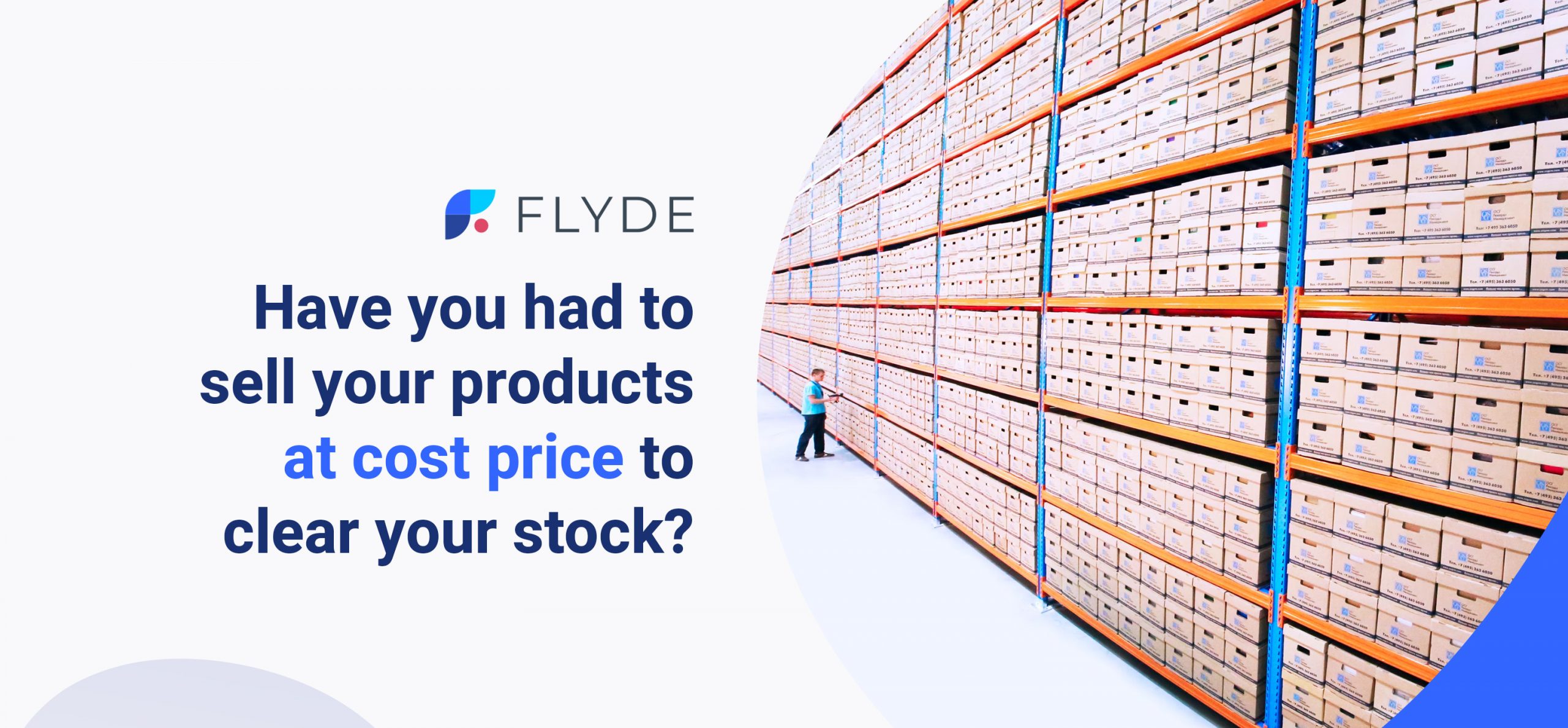
Retail has always been accompanied by the difficulty for companies to manage stock efficiently. In order to do this, optimal sales control and forecasting is necessary, but… How can we rely on the latest advances in technology to do this?
How do I solve my stock management problem?
Stock management has become a complicated task for companies. The rise of omni-channel distribution and sales has meant that a greater involvement is required to keep all these channels up to date and coordinated in real time. For this reason, many companies are opting to apply new technological solutions that improve these processes, reduce costs and ensure an optimal management.
One of the most recurrent solutions to tackle these problems is to implement Warehouse Management Software (WMS). The problem with this type of tool is that, despite its efficiency in the warehouse, it is not a total solution to the problem as it helps to know your stock in real time but does not go beyond that. Not knowing how your stock can evolve or not coordinating this valuable information with other teams such as marketing, sales or finance, are some of the handicaps they present.
If what we are looking for is a more efficient management, which allows us to plan in time to avoid problems such as stock breakages, the solution is to coordinate different tools that give us a broader view of our environment, unify the data from all departments of our company and can provide added value. And one of them, without a doubt, should be the inclusion of an Intelligent CDP.
What solutions can I apply with an Intelligent CDP?
An Intelligent CDP, or Intelligent Customer Data Platform, is a software that will allow your company to unify all the available data of your company, so that all your departments can work in coordination. However, the fundamental value of an Intelligent CDP, as its name suggests, is the application of Artificial Intelligence, to process these data in the most efficient way possible, finding details imperceptible to the human eye, and saving huge amounts of time for employees.
- Unify data: a Smart CDP will allow you to unify data from your WMS, sales, marketing campaigns, and any data you can imagine, and to which your company has access; to later be able to access this platform and get answers about your customers or any movement done by your company.
- Control in real time: access to all the information in a single platform will allow you to see in real time how each movement that the company carries out affects your stock. Thus, for example, the marketing department will be able to observe not only an increase in sales, but in real time they will be able to see the effect of each campaign or action carried out on the warehouse, and vice versa, thus being able to anticipate problems with the lack or excess of stock.
- Predict sales: as we have seen above, the Intelligent CDP is not only a CDP, but applies Artificial Intelligence to take your business to the next level. In this way, an Intelligent CDP allows you to predict sales in real time, and therefore, you will be able to anticipate any stock management problem, with an accuracy that could reach heights of over 95%, depending on the amount of data provided. And not only that, you will also be able to: establish relationships about peak and off-peak sales periods, and of which products. Which specific customers are buying each product, in what quantity and when or at what times the company is most likely to run out of stock, etc. All this is now possible with FLYDE.
WHY FLYDE?
Do you want your company to move on to the next level? A CDP is the key tool that will allow you to maximise the potential of your data and grow your business. Working like the big multinationals in the market, which already have this type of software, and having control over all your data is now very simple.
Moreover, if you do not have IT or Data Scientist teams, this tool will allow you to outsource this function. And if you have them but want to reduce their workload and give more autonomy to your marketing and business teams when it comes to working with data, implementing an easy-to-use CDP would be the best option for your company. It will allow any single member of your company to use it, as this softwares are prepared for them.
Start taking control of your data today.
Schedule a meeting with one of our experts and discover how FLYDE can help your company achieve its goals.