This guide is available in Spanish only for now.
A few customers hold almost all the margin. Do you know who yours are?
In retail, value is almost never evenly distributed: a fraction of the base holds most of the margin. This guide gathers the 8 segmentation models with the most proven impact, from RFM to predictive, with their signals, KPIs and common mistakes.
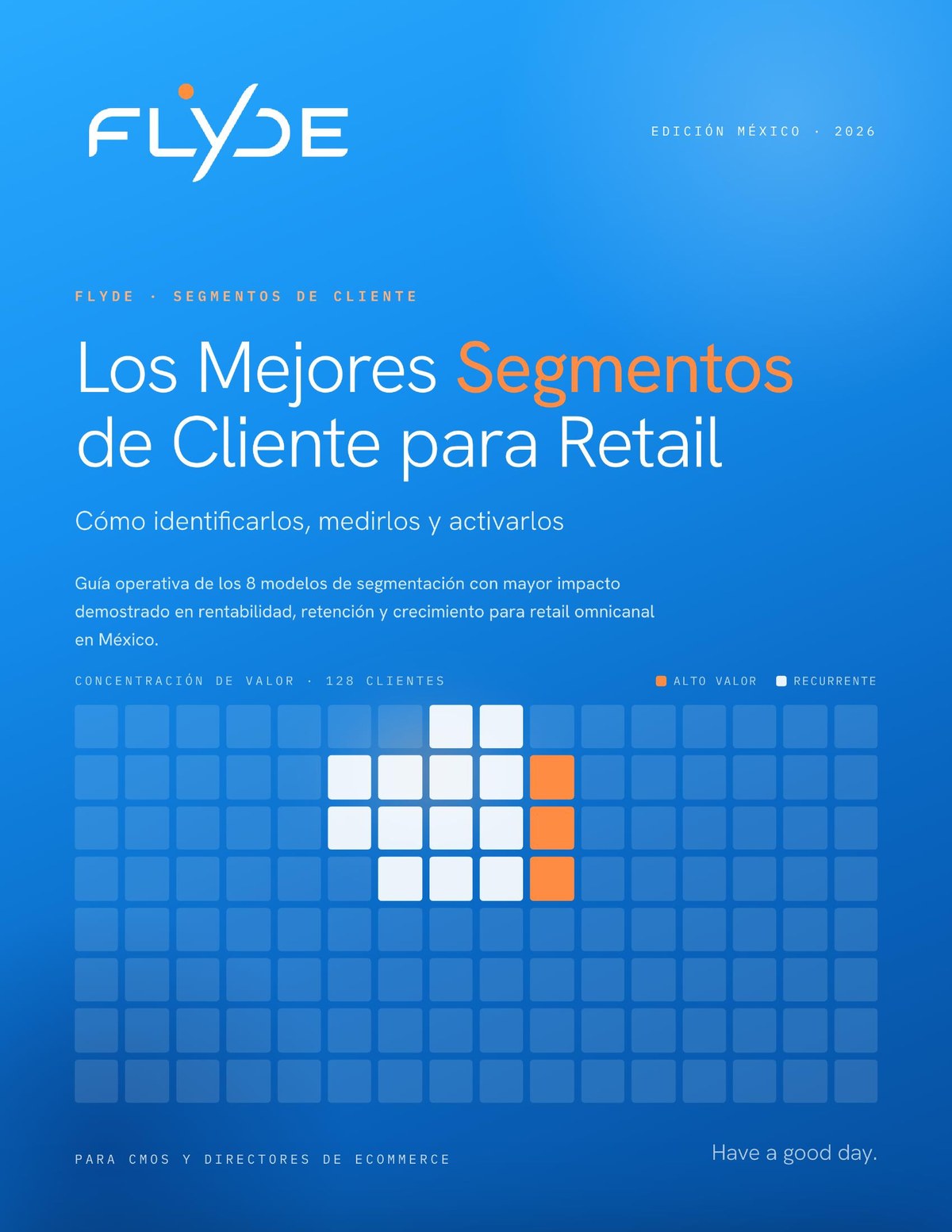
Few customers, almost all the margin.
Segmentation makes that concentration of value visible, and avoids the mistake of investing where it's convenient to measure instead of where the real margin is created.
Champions are 5–15% of the base but hold 35–55% of the margin; Hibernating is 25–40% of the base and only 5–10%. Indicative ranges; illustrative model.
Eight models, from the most accessible to the most advanced.
Each model measures a different customer dimension and answers a specific business decision. The guide details the signal, the success KPI and the common mistake of each segment.
The RFM model
Recency, frequency and value. The unbeatable starting point: five segments with immediate action using only transactional data.
Predictive LTV
From historical spend to future value: where to invest based on what each customer will generate over the next 12 months.
Price sensitivity
Between 25% and 40% would buy without a discount. Identifying them is the most immediate profitability lever.
Lifecycle
New, activating, mature, at risk, inactive. The time dimension: each stage, a journey and a goal.
Omnichannel
Those who buy in store and online are worth 40–150% more. A strategic segment to see, protect and grow.
Category affinity
The most underrated segment in personalization: category relevance that also solves excess inventory.
Predictive segments
Propensity for 2nd purchase, churn, upselling and full-price purchase. The leap from reacting to anticipating.
Loyalty and win-back
The segments inside the program and selective recovery: win back by historical value, not by mass discount.
This guide is for you if…
You apply the same discount to the whole base
In Hot Sale and El Buen Fin you give away margin to customers who would have bought at full price anyway.
You spread retention evenly
The budget dilutes across low-value customers and leaves high-value ones who are starting to leave unprotected.
You don't know what % holds your margin
Without seeing the concentration of value, investment goes where it's convenient to measure, not where the margin is created.
You communicate the same to everyone
The one-size-fits-all message saturates the base and erodes the effectiveness of each campaign.